SaaS

Designing a PR-First AI Tool That Thinks Like a Teammate

Designing a PR-First AI Tool That Thinks Like a Teammate

Designing a PR-First AI Tool That Thinks Like a Teammate

Who says powerful AI has to feel complicated? We redesigned Barista into a PR-first platform that works like a teammate, helping PR teams move faster with clearer workflows, smarter collaboration, and focused content creation across clients.

Location

Location

USA

Duration

Duration

10 weeks (April 30 – July 9, 2025)

Date

Date

Tools

Tools

Figma, FigJam, Notion

Designing a PR-First AI Tool That Thinks Like a Teammate

The Client

Barista is an AI-powered platform built for public relations agencies. Its goal is to free PR teams from the daily grind of writing, reporting, and chasing data so they can focus on what humans do best: telling powerful stories. Barista acts like an editorial assistant trained on your client’s voice, helping professionals create content, monitor media, and generate pitch ideas instantly. The team came to us with strong early work, including wireframes, user flows, and early feedback. What they needed was a design partner to turn that foundation into a cohesive, high-fidelity experience that felt thoughtful, intuitive, and unmistakably PR-friendly.

The Challenge

Barista was never meant to be just another AI app. It needed to feel like a colleague built for PR teams, not a complex dashboard. While the underlying AI engine was powerful, the early UI felt unfinished. The client needed a clearer, more intuitive interface that balanced structure with warmth without overwhelming users with editorial noise. Our role was to design the core product flows, build a flexible design system, and establish a visual language that made AI feel supportive, approachable, and genuinely useful for everyday PR work.
Our Approach

We treated Barista as a long-term product, not a feature-led AI tool. The focus was on understanding how PR teams work day to day, where friction shows up, and how different roles interact with the platform.

We used research and mid-fidelity wireframes as alignment tools, collaborating closely with the team to test assumptions, validate flows, and make decisions early. Visual design came only after the structure felt right, ensuring every interface choice had a clear purpose.

What We Did

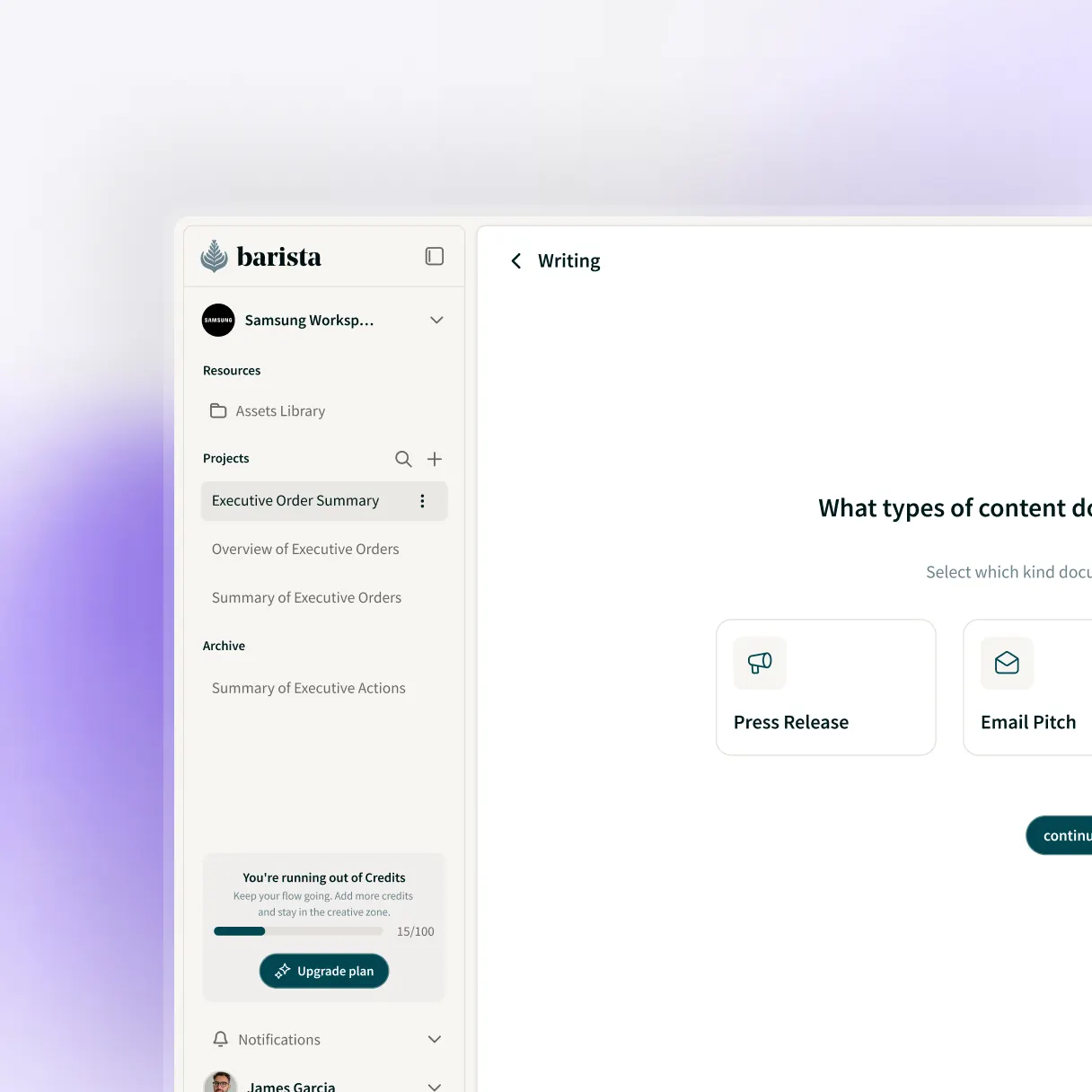
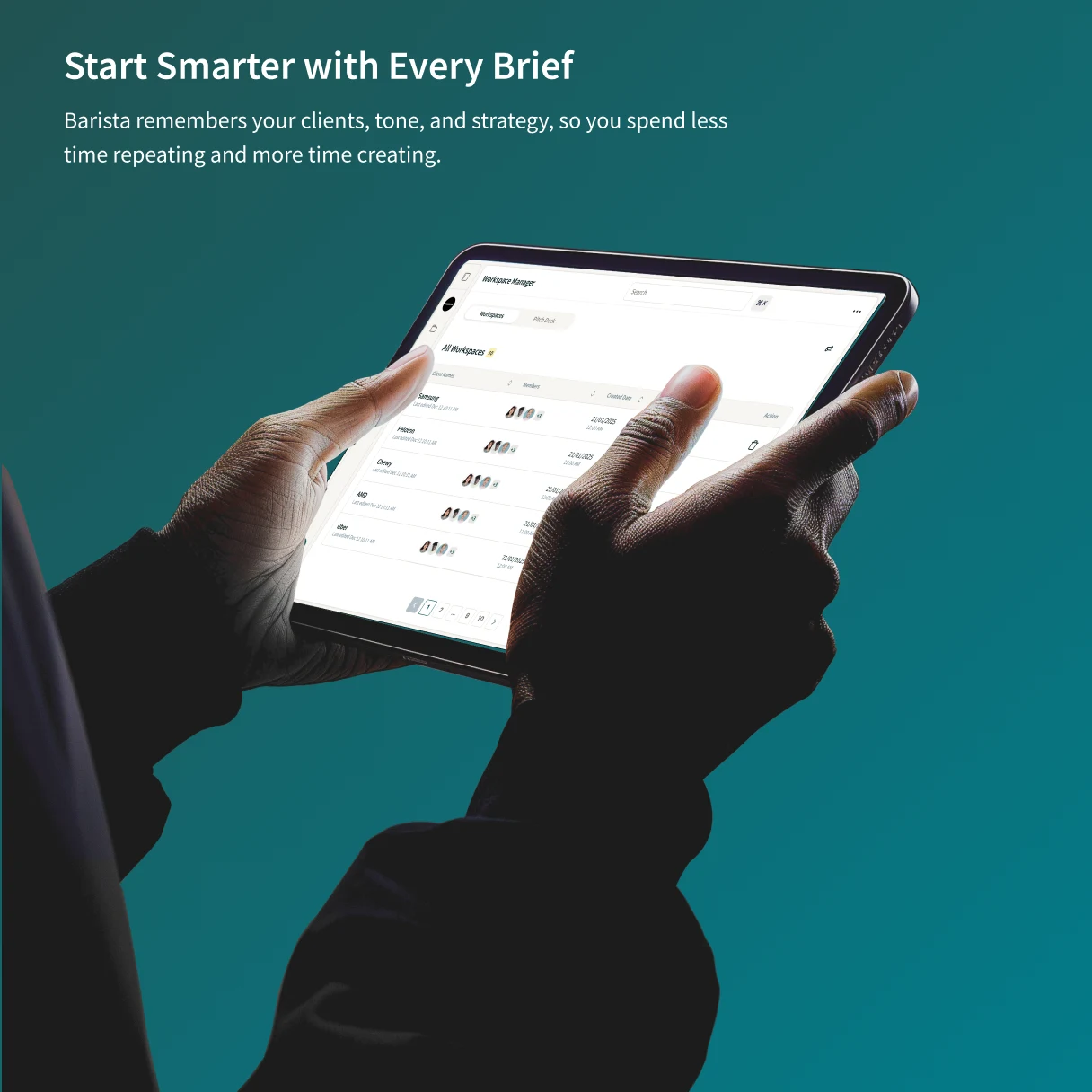
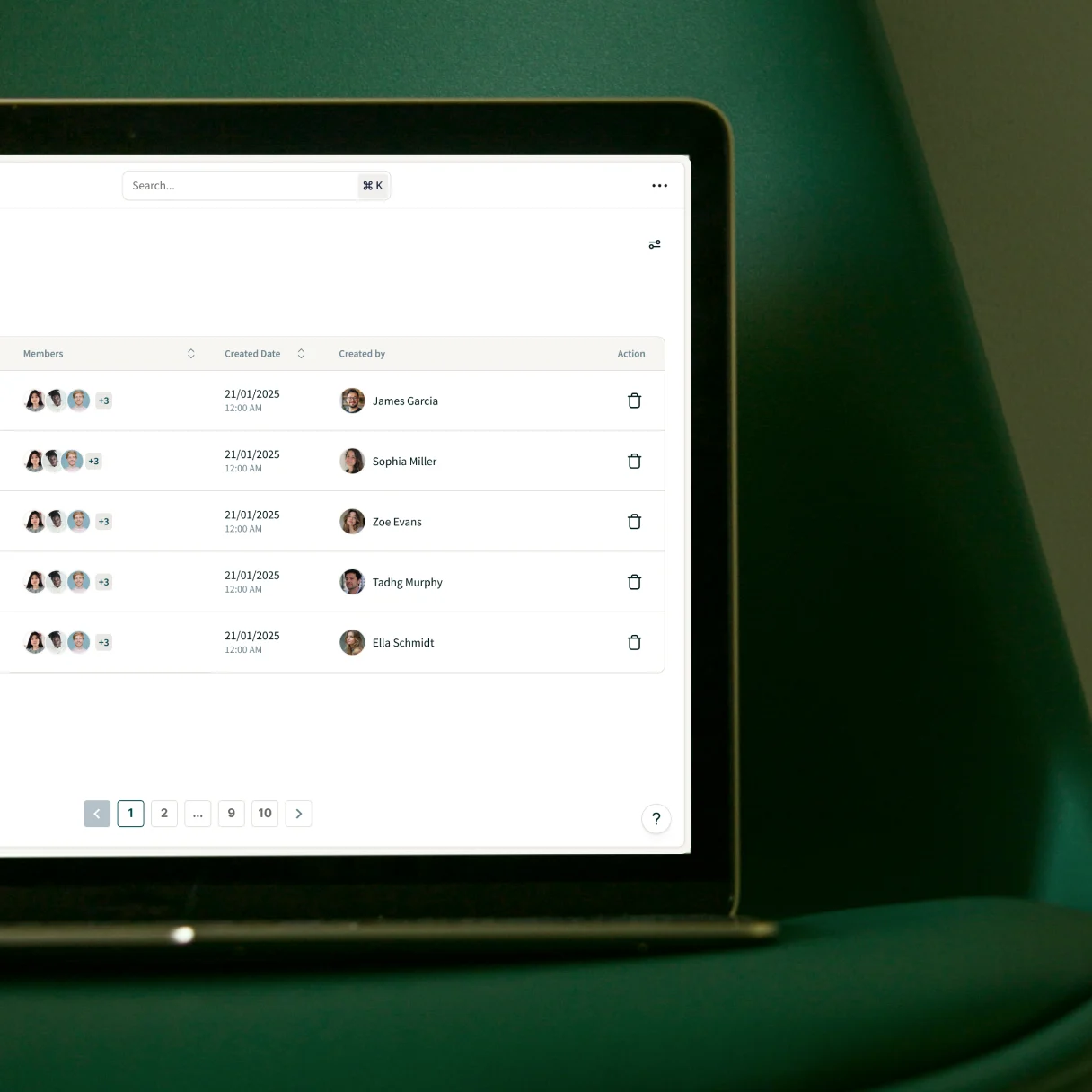
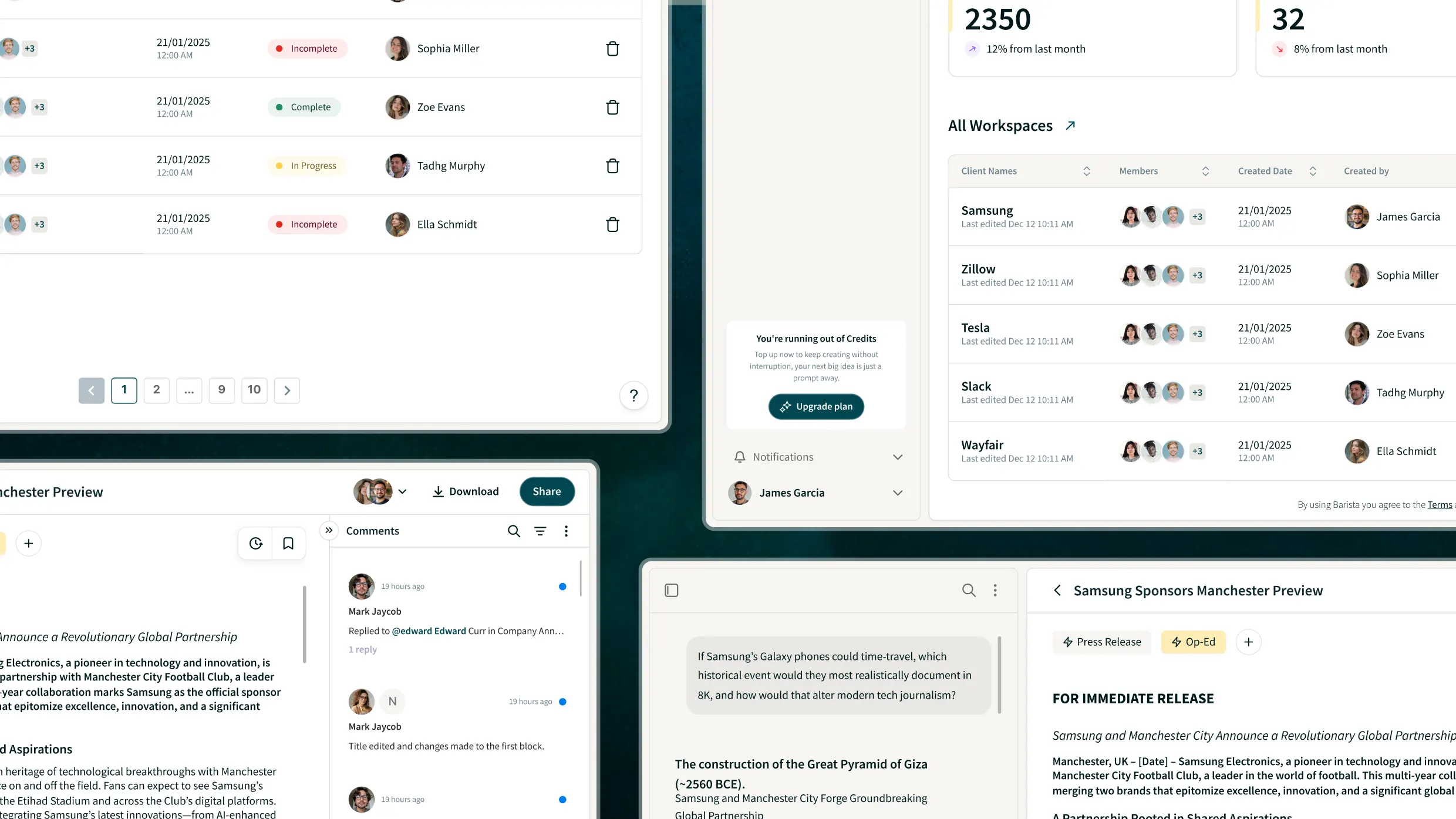
We redesigned Barista’s core workflows to make everyday PR tasks faster and easier. Onboarding, content creation, client setup, and credit management were streamlined to feel natural and efficient. A role-based system gave Super Admins, Admins, and Members clear access without overwhelming them.

Visually, we introduced a modular design system that matched Barista’s professional and editorial tone. Clear typography, flexible components, and subtle guidance brought writing tools, content previews, and billing into one cohesive interface that feels like a polished assistant, not traditional software.
Design System

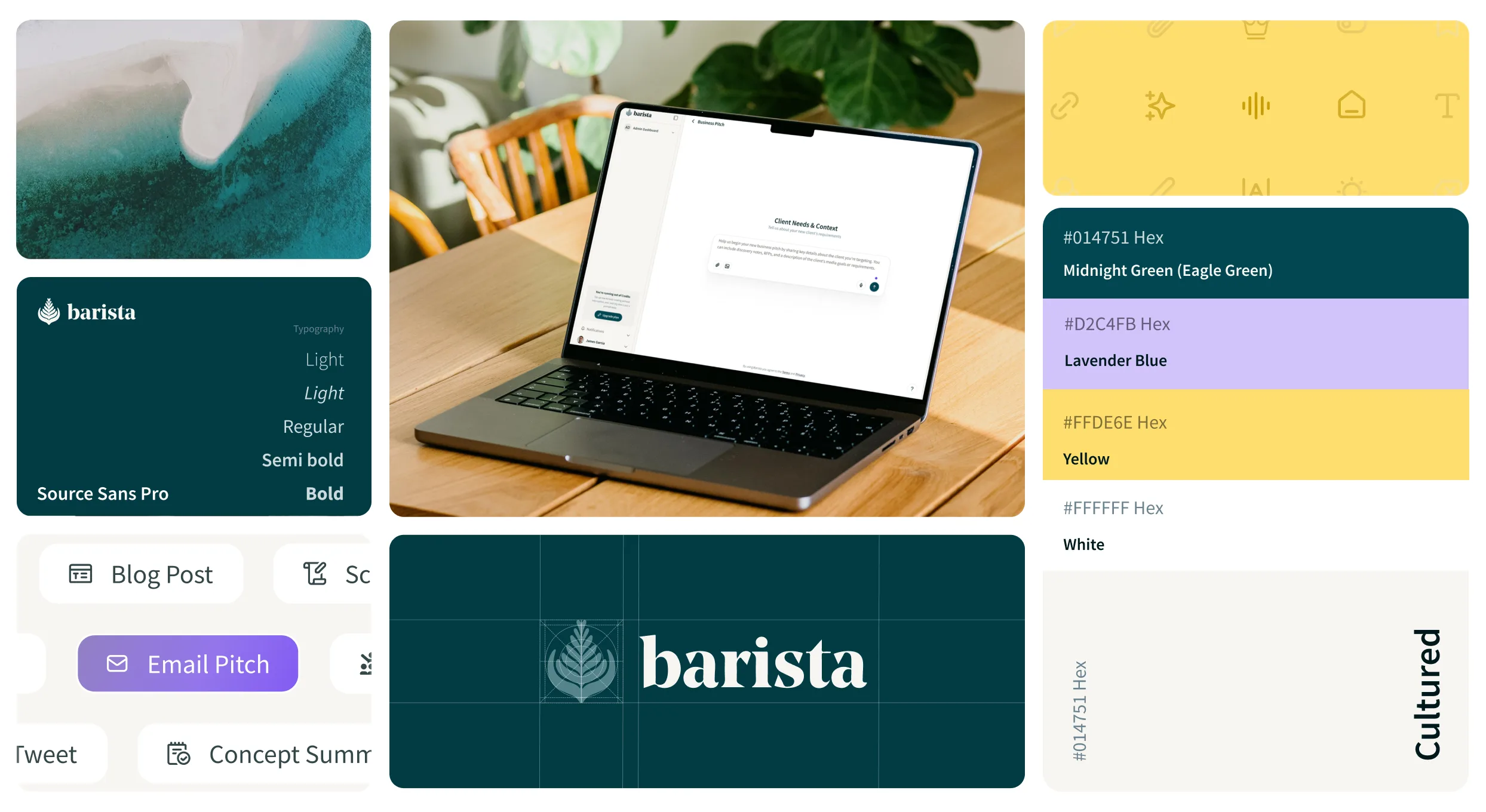
We built a flexible, future-ready design system that balances structure with personality, helping Barista feel both intelligent and human. Every component was designed for clarity and speed, with typography, spacing, and layout grounded in usability best practices.

The type system draws from modern, editorial-inspired fonts that feel natural in PR and media environments. Colors were chosen for subtle contrast and restraint, giving the interface confidence without visual noise. Reusable components such as buttons, form fields, tags, and navigation were designed to scale seamlessly across user roles, devices, and future product features.
Your AI Co-Writer + Team Collaborator

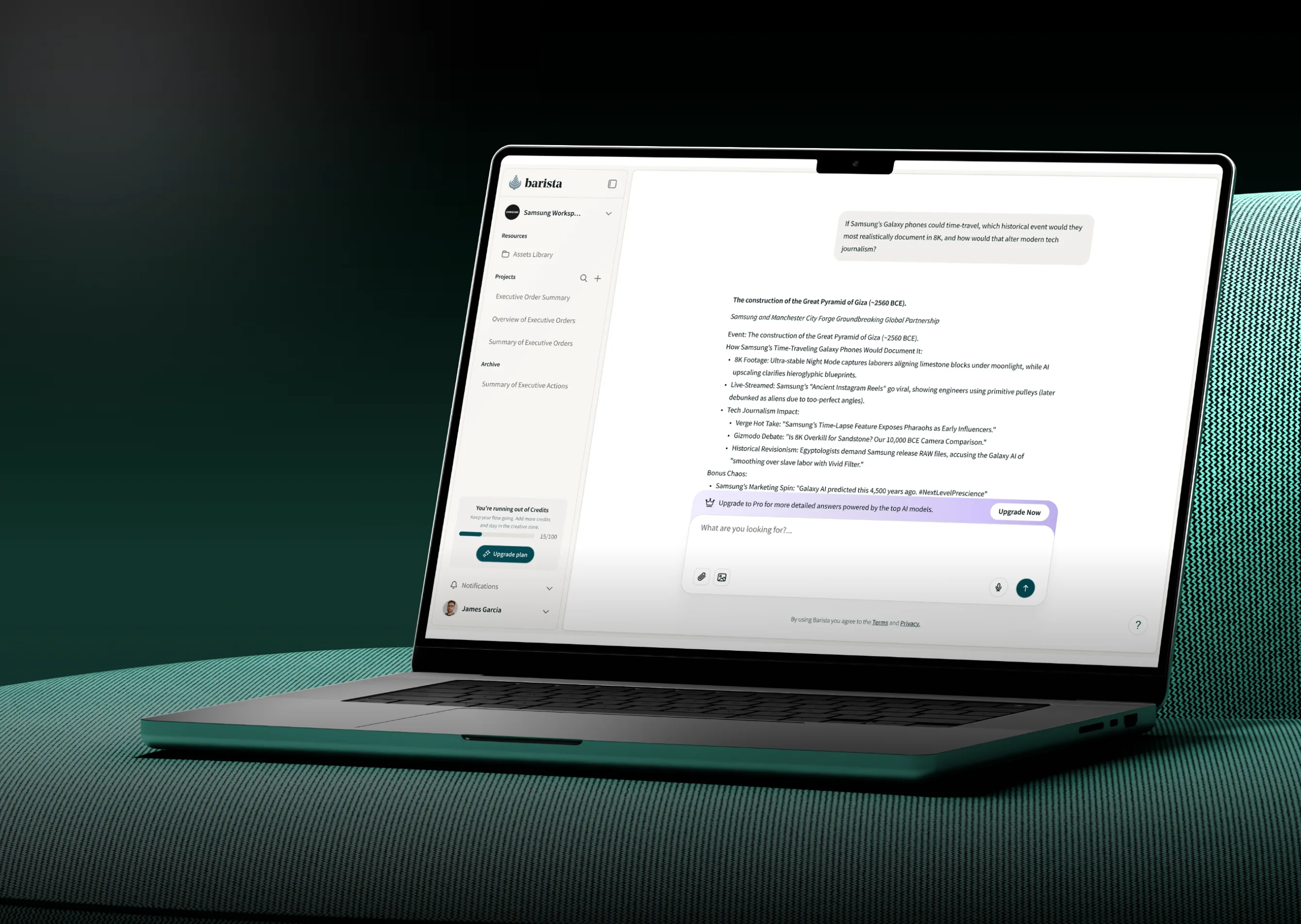
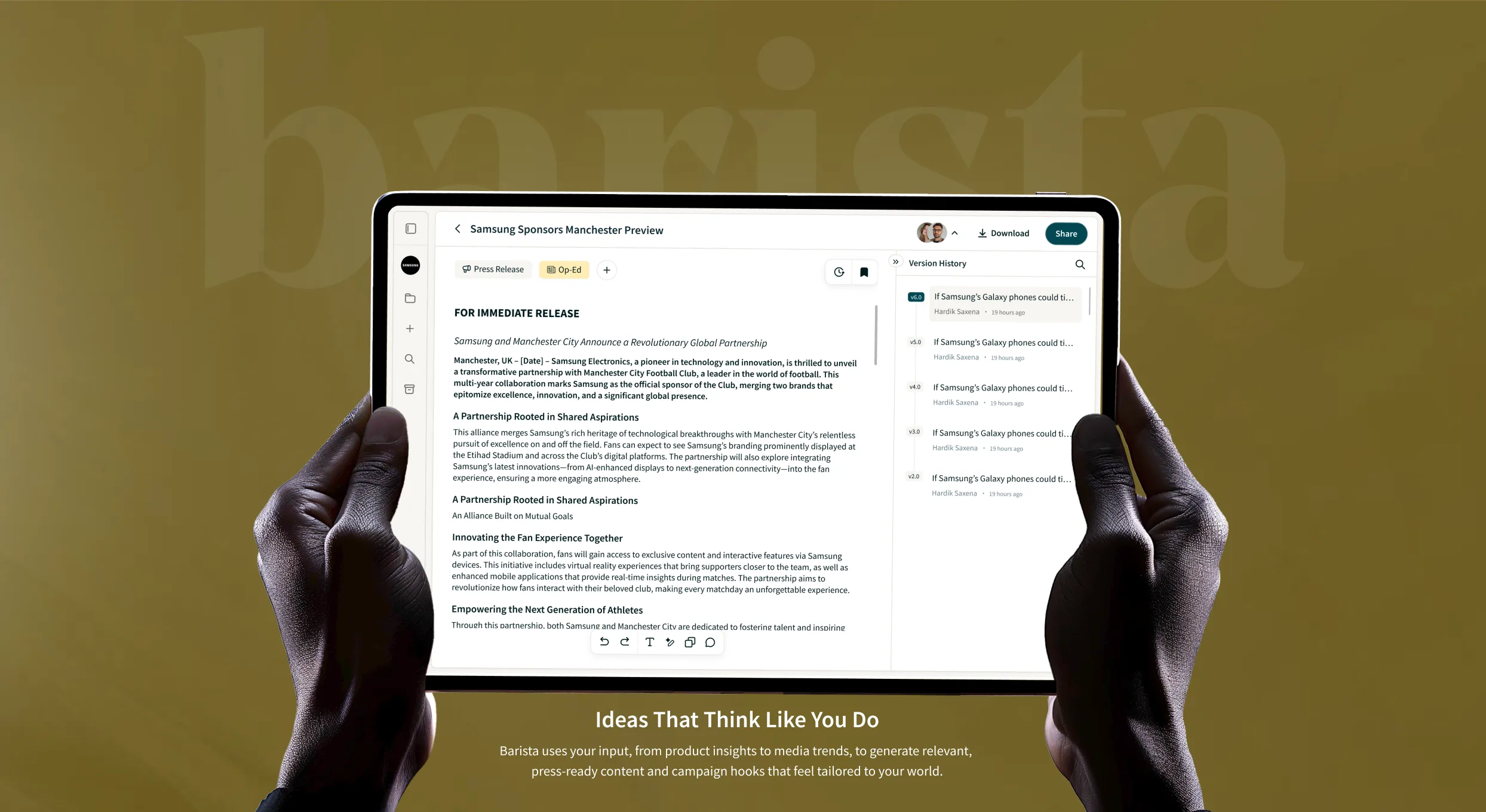
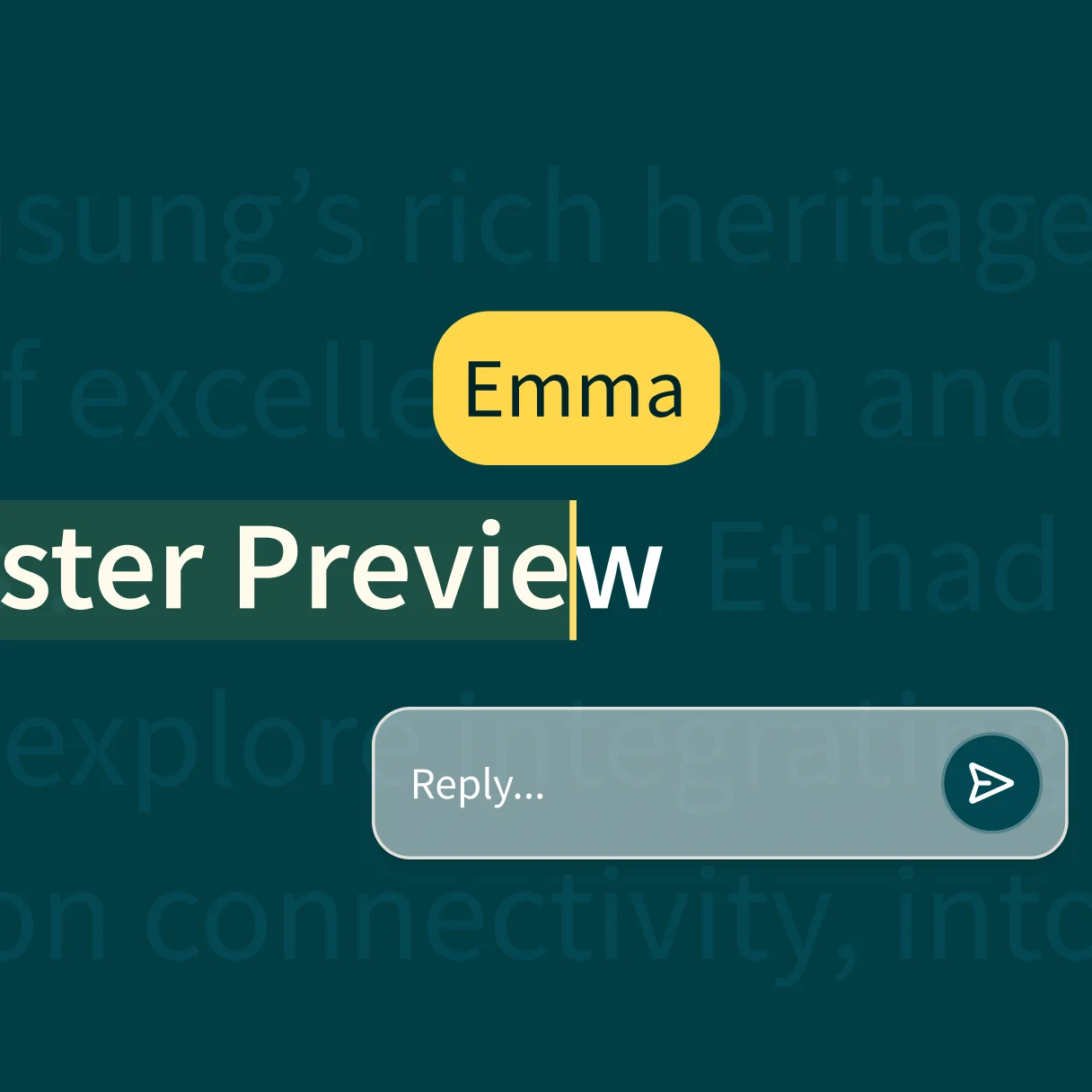
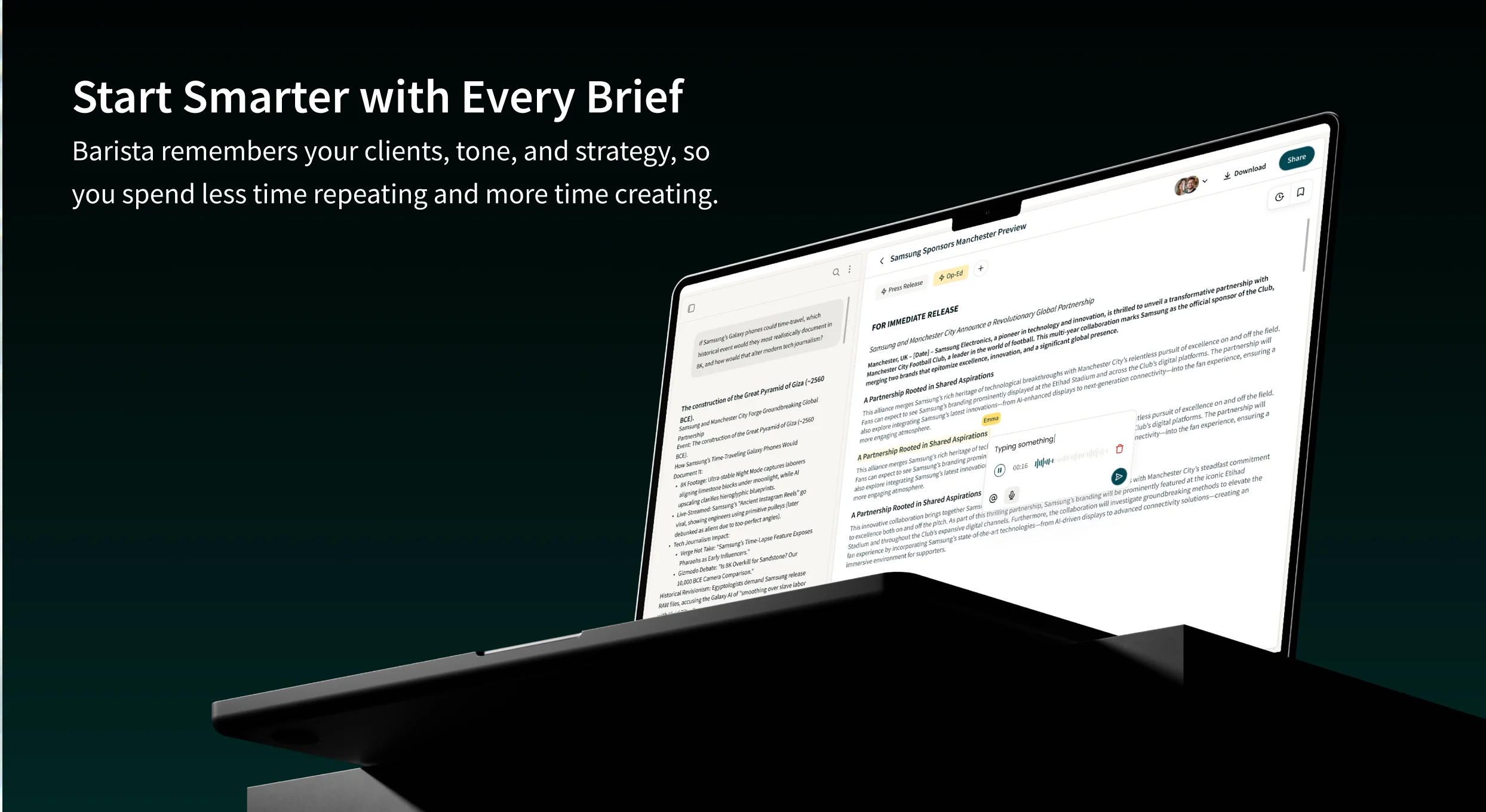
At the heart of Barista is the Content Editor, a space designed for clarity and creative control. Each prompt is displayed alongside the AI-generated output, with tools to revise, re-prompt, or save multiple drafts.

We also added a built-in commenting feature, allowing team members to leave feedback, ask questions, or suggest edits directly in the editor. It turns a solo workflow into a collaborative one, giving PR teams a real-time space to think, write, and refine together.
Design Process & Visuals

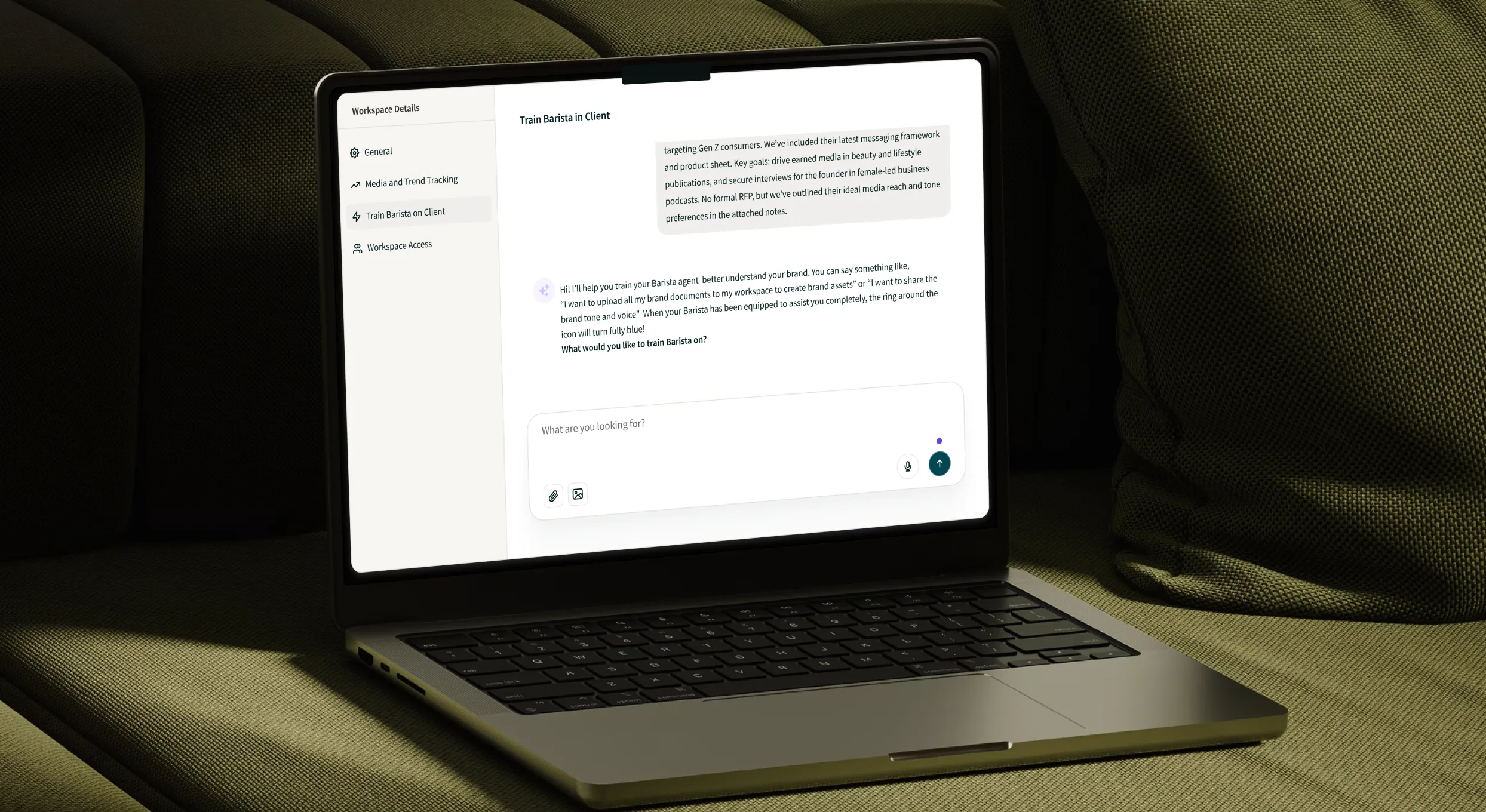
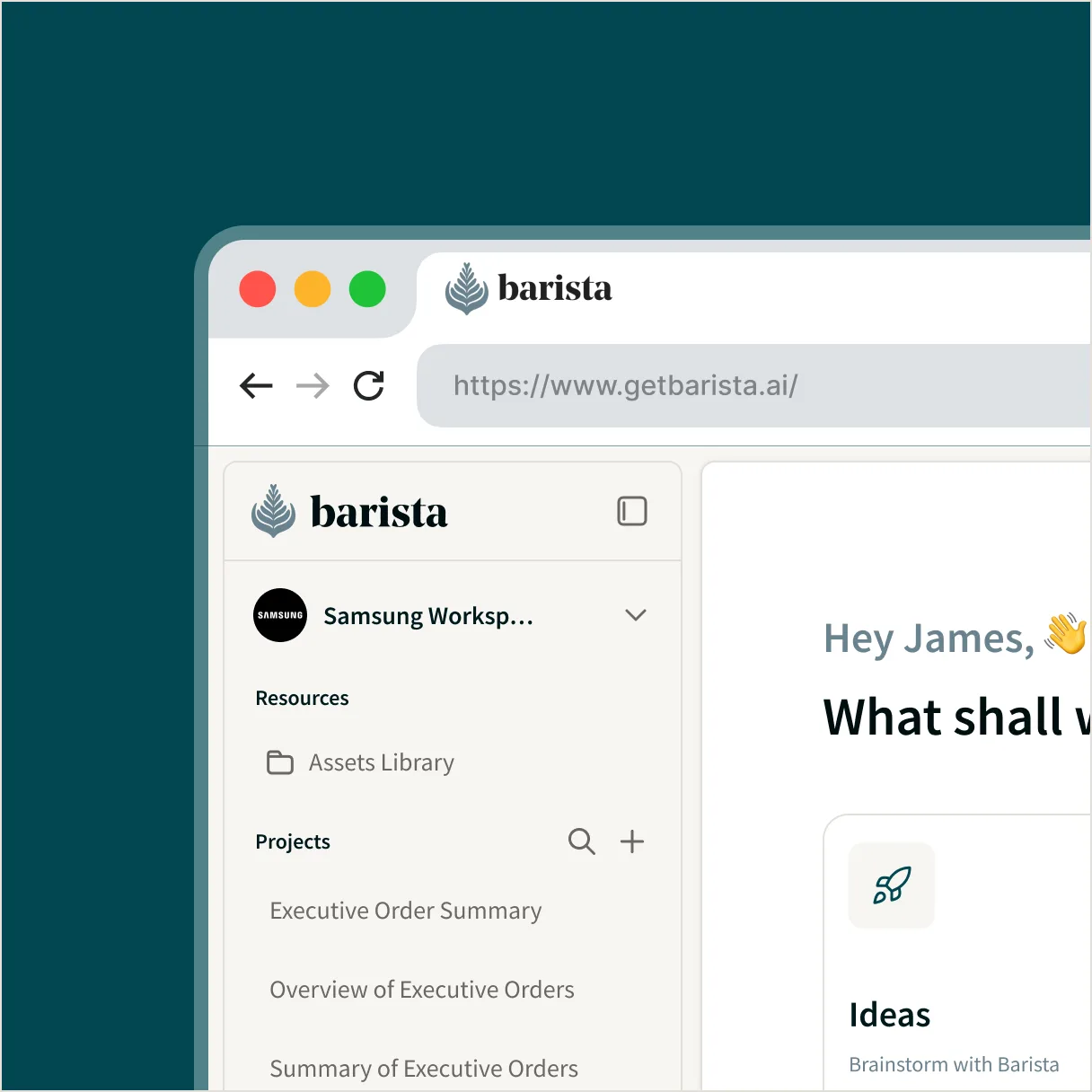
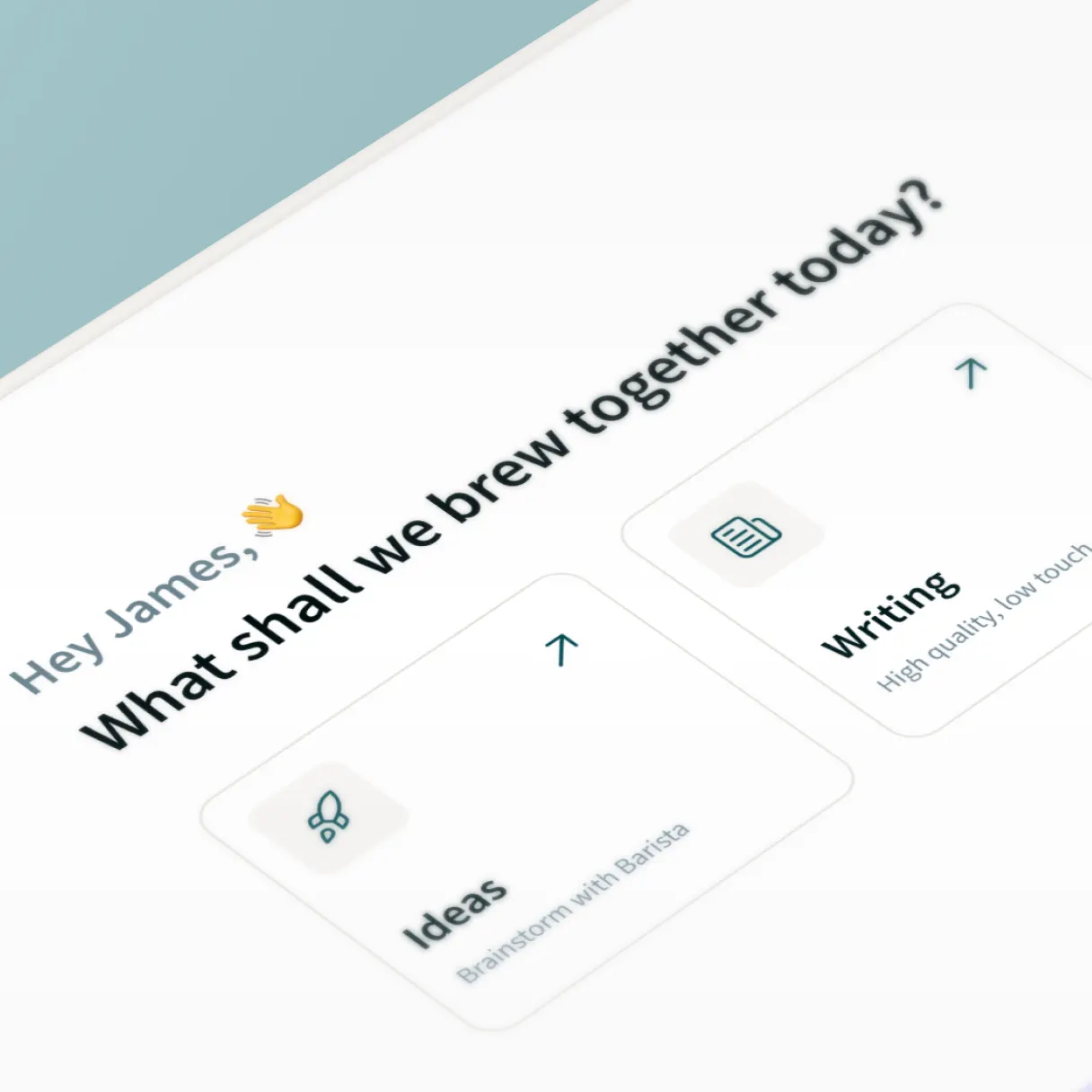
We wanted Barista to feel less like software and more like a teammate. The experience stays clear and focused, from role-based dashboards that give Admins visibility without clutter, to simple starting points that begin with a choice between idea exploration and writing.

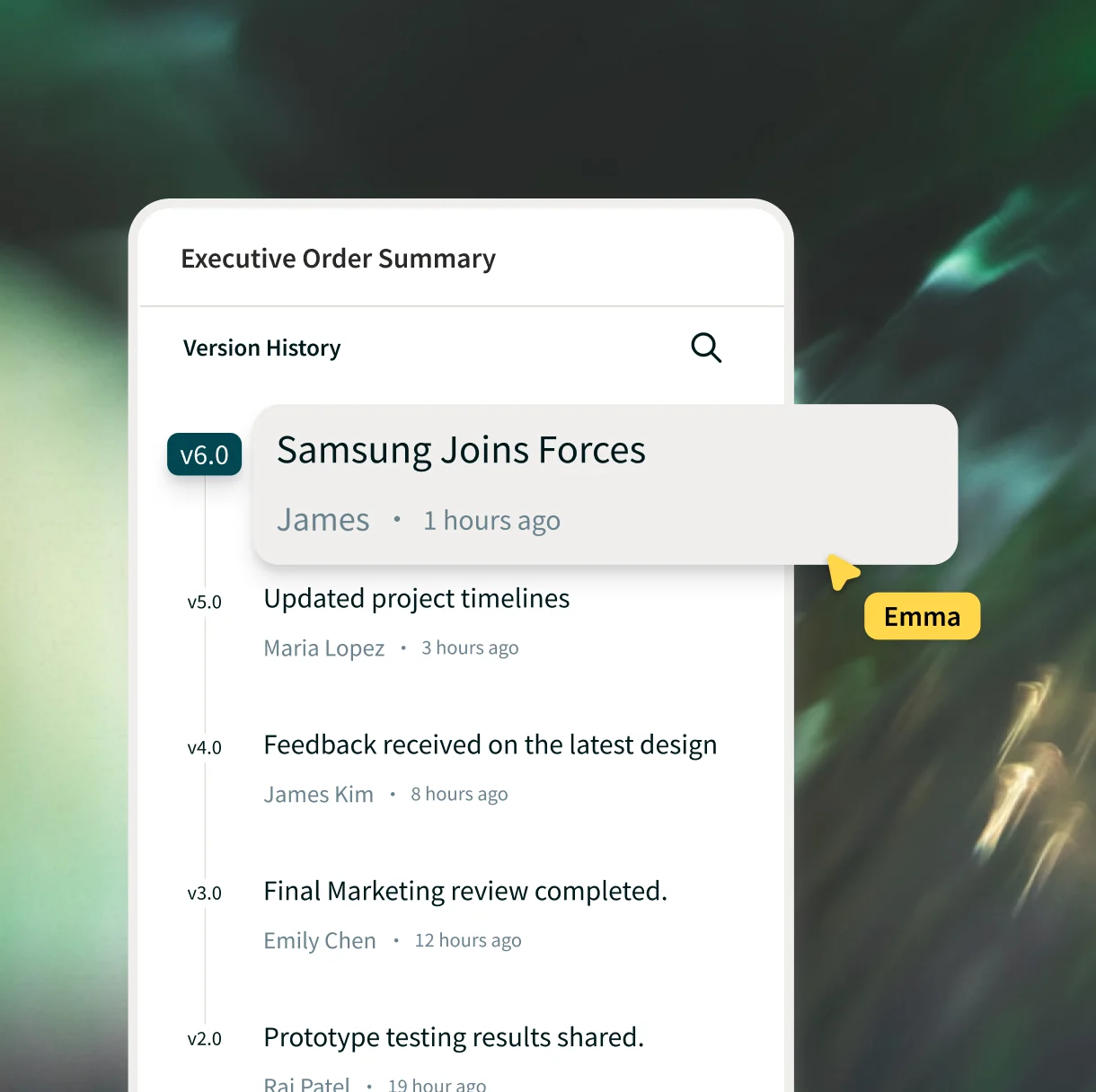
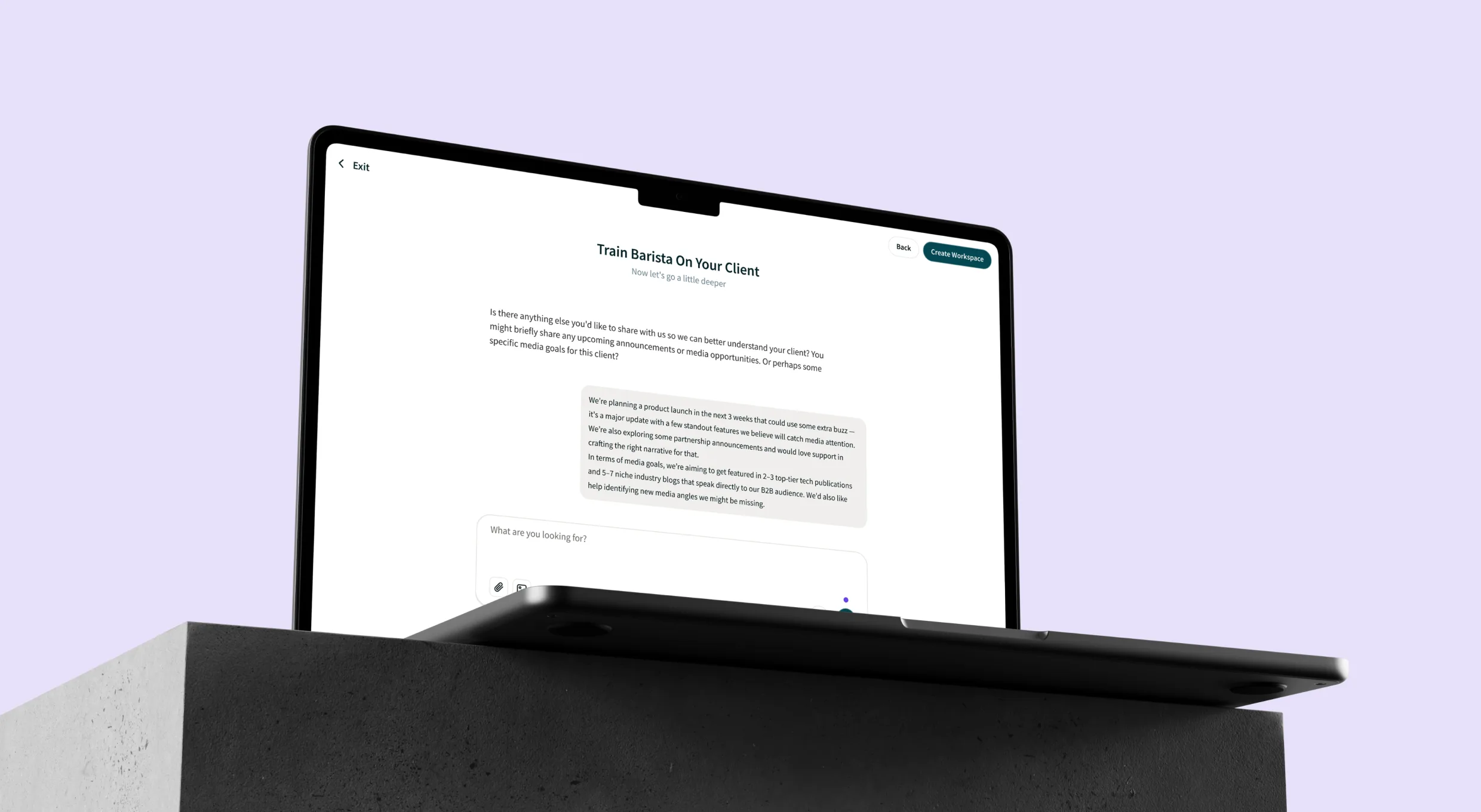
Each client workspace is tuned to its own voice, helping teams stay consistent as content takes shape. Commenting and versioning are woven in quietly, so collaboration feels natural and never breaks the flow of work.
Testing & Iteration

After sharing the prototypes, we gathered feedback from the Barista team and their early users. Several adjustments were made: softening some of the visual elements, increasing whitespace for readability, and tuning the interaction model to feel more "editorial studio" than "tech SaaS."

The Results

The Barista team now has a complete product experience that reflects their original vision. It brings together advanced AI with a distinctly human approach to PR work. The platform is modular, role-aware, and designed to grow as new features are added. Early responses from clients have been positive, and the product is ready for pilot testing and broader team adoption.

FAQ

We’ve heard it all. Here’s everything you need to know before working with us.
How much does a UX design project with Groto cost?

Fixed projects start at US$5,000. Hourly engagements are US$50/hour. Share your brief so we can recommend the right scope.

How quickly can you start, and when will I see the first designs?

You can meet your designer within 24 hours and work starts immediately after. The 7-day free trial delivers a real design task from your actual backlog, not a mockup, so you see output in the first week. For Part-Time and Full-Time plans, a full UX strategy report lands within two weeks.

What happens if I do not like the designer or the work?

Start with the 7-day free trial before paying anything. If the fit is wrong, you walk away at no cost. After that, plans are month-to-month, you can request a different designer at any time, and you can pause for up to three weeks per quarter with credits rolling over. Cancel anytime.

Do I get one designer or a whole team?

You get a dedicated designer as your primary contact, backed by Groto’s 20-person studio. That means one consistent person who knows your product, with specialist support pulled in for research, brand, or development work without a new contract.

How do you measure whether the design actually worked?

Groto ties design work to product metrics agreed before the project starts, typically conversion rate, activation, task completion, and retention. On the IVHQ engagement, that produced a 2.3X conversion rate increase and 1.25X improvement in customer retention. Every engagement begins with a baseline measurement so the change is attributable.

Do you design UX for AI chatbots and conversational tools?

Yes. Groto designs conversational UX for chatbots, assistants, and support tools, covering the parts that break most often: turn-taking and interruption handling, streaming response states, fallback and handoff to a human agent, and tone calibration so the bot does not overpromise. The hard part is not the chat window, it is what happens when the model is confidently wrong.

Can your team handle UX for AI agents and copilot-style products?

Yes. Agentic and copilot products need patterns traditional UX does not cover: showing what the agent is about to do before it acts, permission gates on irreversible actions, human-in-the-loop checkpoints across multi-step tasks, and undo that genuinely reverses state. Groto has shipped copilot and agent interfaces for Camb.ai (AI dubbing) and Pathways (AI hiring). Trust calibration matters more than speed.

Do you help enterprises with UX for AI dashboards and reporting tools?

Yes. Groto designs data-dense enterprise dashboards and reporting tools, including AI-generated insights where the real design problem is explainability: showing why the model surfaced a number, letting analysts drill from summary to source rows, and flagging low-confidence output instead of presenting every figure with equal certainty. Enterprise buyers need an audit trail, not just a chart.

Is Groto a good fit for a B2B SaaS or enterprise product?

Yes. Groto specialises in complex B2B SaaS, enterprise internal tools and AI products, including dashboards, admin panels and data-heavy interfaces where information density matters more than visual polish. Current work spans AI platforms, fintech, healthcare and edtech, with clients across the USA, Europe, the Middle East and Asia.

What should I look for when choosing a UX design agency, and what are the red flags?

Ask for three things: a case study in your product category with named metrics, a trial or paid pilot before any long commitment, and direct access to the designer who will do the work. Red flags are portfolios with no measurable outcomes, contracts longer than three months with no exit, and account managers standing between you and the designer.

What does AI-first UX design actually mean in practice?

AI-first UX design means designing for products where the interface is non-deterministic: the output changes every time. That requires patterns traditional UX does not cover, including confidence and uncertainty states, correction and undo flows, streaming responses, prompt affordances, and graceful failure when the model is wrong. Groto has shipped this for AI dubbing, PR automation and AI hiring platforms.

How do I know your AI and ROI claims are real?

Every metric on this site traces to a named client engagement, not an internal estimate. The 4.9 rating comes from verified Clutch reviews you can read directly. For AI work specifically, ask to see the interaction patterns we shipped, not the visuals, since AI UX quality lives in error and uncertainty states rather than screens.

How does the 7-day free trial work?

Pick a real task from your backlog and Groto delivers it within seven days at no cost and with no card required. You keep the work regardless of whether you continue. The point is to judge us on output from your actual product rather than a curated portfolio.

Can you handle brand identity and marketing design as well as product UX?

Yes, and this is unusual for a product design studio. Groto's 12-person brand team covers brand identity, marketing design, landing pages and design systems alongside product UX. That means your product interface and your marketing site come from one team with one design system, instead of two vendors producing work that does not match.

Do you work across time zones, and how does that work day to day?

Groto's team overlaps at least half a business day with your time zone, so there is a real window for live calls and same-day feedback rather than a 24-hour round trip. We work with clients across the USA, Europe, the Middle East and Asia. Outside that window, progress moves through async updates, Loom walkthroughs and shared boards, so you always know where a design stands.