Eleken Alternatives: 8 Design Partners Compared by Price, Model and Fit (2026)

10 min read

10 min read

Tools & Resources

Eleken Alternatives: 8 Design Partners Compared by Price, Model and Fit (2026)

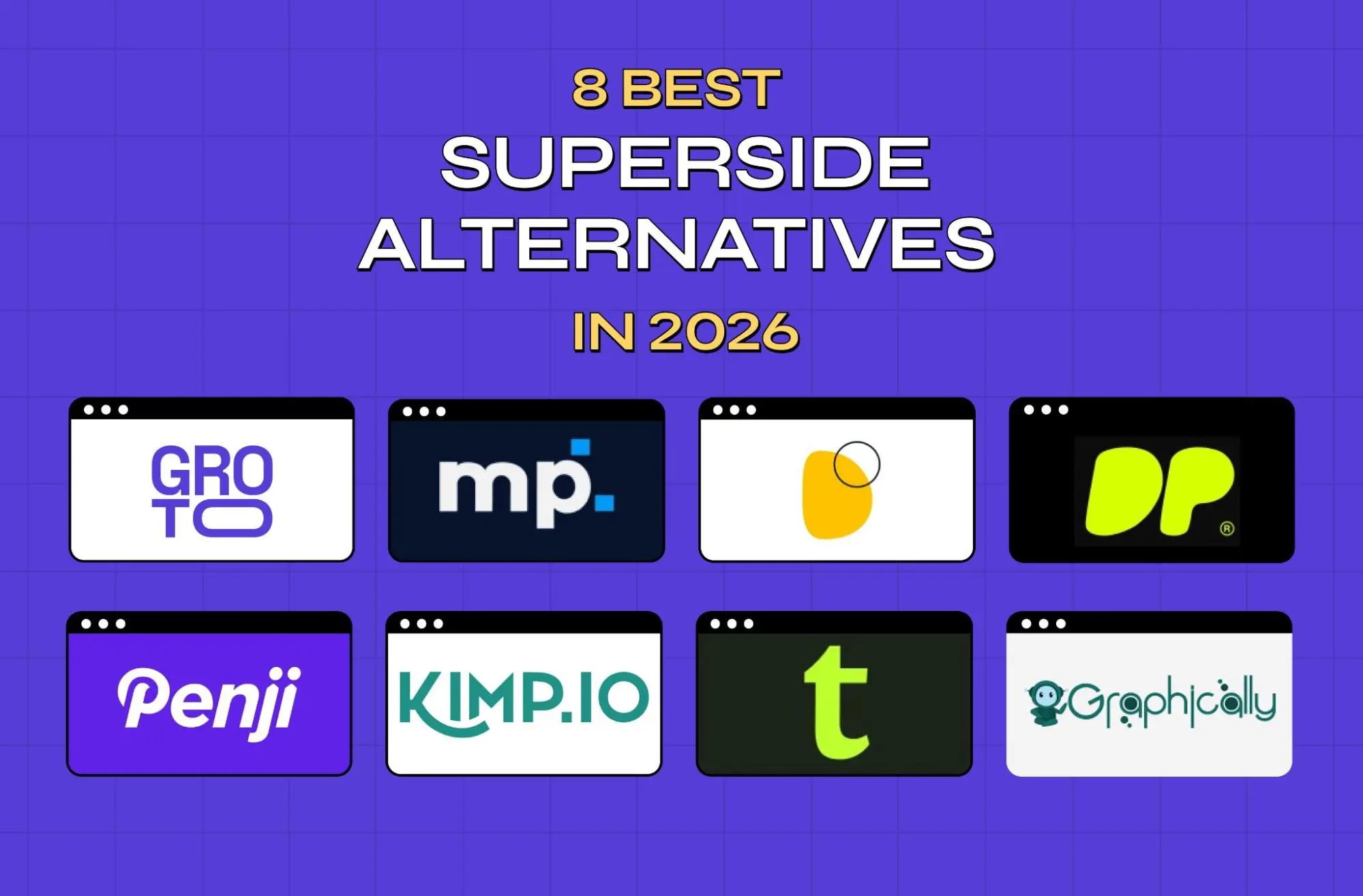
Eight Eleken alternatives compared on what each one charges, how they actually work, and which model fits. Published prices, split by subscription and project.

Eleken Alternatives: 8 Design Partners Compared by Price, Model and Fit (2026)

10 min read

10 min read

Tools & Resources

Eleken Alternatives: 8 Design Partners Compared by Price, Model and Fit (2026)

Eight Eleken alternatives compared on what each one charges, how they actually work, and which model fits. Published prices, split by subscription and project.

Eleken publishes its prices, which makes it easy to compare against. The harder question is whether you want another subscription at all, or a project partner instead. Here are eight options, what each costs, and who each one suits.

Eight Eleken alternatives, real prices, split by subscription and project.

TL;DR

  • Eleken charges $4,599 a month for a part-time designer and $6,599 for a full-time one. That's the number to compare everything else against.

  • If the subscription model is working and only the agency isn't, Groto, Designjoy and Awesomic are the closest swaps.

  • If what you actually need is a finished project rather than a monthly designer, Clay, Ramotion, MetaLab, UX Studio and Cieden work differently and are priced differently.

  • Check the exit terms before the price. Minimum terms, notice periods and who owns the files vary more than the monthly fees do.

  • Groto is first on the list, on the subscription side, at $2,399 to $10,000 a month.

Disclosure: Groto wrote this page and is one of the eight options compared. All figures are as published in November 2026. Confirm any number with the agency before you sign anything.

Most people searching for Eleken alternatives have already decided something. Either the price doesn't work, the model doesn't fit, or the designer did but the setup around them didn't.

So the useful split isn't a ranked list. It's whether you want to keep buying design the way Eleken sells it, a dedicated designer on a monthly fee, or whether the thing you actually need is a scoped project with an end date. The first four below are the former. The last five are the latter. Before comparing any of them, it helps to be clear on what a UI/UX design agency actually delivers, because the gap between agencies is usually scope rather than skill.

What Eleken costs and what you get

Eleken publishes its pricing openly, which not every agency on this page does.

Plan

Price

Part-time designer

$4,599 a month

Full-time designer

$6,599 a month

Two full-time designers

$11,999 a month

You get a dedicated designer rather than a request queue. There's a three-day free trial that produces one or two screens, a two-month minimum, and after that it runs month to month with a month's notice to stop. The team is over 100 people, it has been going since 2015, and it works only with SaaS companies. Its own site says non-SaaS products aren't a good fit.

That's a clear offer, and for a lot of teams it's the right one. The reasons people look elsewhere are usually specific: the entry price is higher than a seed-stage budget allows, the three-day trial isn't long enough to judge on, or the work needed has crept beyond the product interface into the website, the brand or a design system. If it's the last of those, our wider subscription design roundup covers more services against the same criteria.

The eight alternatives at a glance

Agency

Model

Published price

Eleken (baseline)

Dedicated designer subscription

$4,599 to $11,999 / mo

Groto

Subscription, dedicated team

$2,399 to $10,000 / mo

Designjoy

Subscription, one request at a time

$4,995 / mo

Awesomic

AI plans plus expert plans

$19 to $499, $1,799 to $3,219 / mo

Clay

Project

$50,000+

Ramotion

Project

$25,000 to $100,000+

MetaLab

Project

Not published

UX Studio

Project or subscription

Not published

Cieden

Project or retainer

$10,000+

All figures as published, November 2026. Where a cell says a price isn't published, there isn't a public one. Trial and exit terms vary widely and sit in each entry below, because they matter more than the headline fee. Pricing models shift, so confirm current terms before you commit. For the wider picture of how these structures compare, our guide to web design agency pricing breaks down each one with its trade-offs.

Eleken alternatives on a subscription model

1. Groto

Groto homepage with the headline AI-First UX Design Agency and a 4.9 out of 5 Clutch rating

Model: monthly subscription with a dedicated designer embedded in your team. Price: $2,399 to $10,000 a month. Trial: 7-day free trial on a real task, with a designer matched in 24 hours.

Groto is a design partner for SaaS and AI products, and the thing that separates it from a straight Eleken swap is what sits inside one agreement: the product interface, the design system underneath it, and the marketing site that has to sell the same thing the product delivers.

That matters because the usual alternative is three relationships. A product designer, a separate studio for the website, and nobody really owning the system in between. The cost of that isn't the three invoices. It's explaining your product from scratch to every new team, and ending up with a homepage that promises something slightly different from what a user meets after signing up. Covering all three means you brief one team and the experience stays connected from the marketing site through to the product. It's also senior design capacity on a complex product without hiring for it, which at seed to Series B is usually the real decision in front of you.

What comes with the designer is the other difference worth knowing. Project management is part of every engagement, so the designer spends their time designing rather than running their own backlog, and the Part-Time and Full-Time plans add a UX strategist who ties design decisions to product metrics rather than to a task list. The focus is switchable month to month between UX, UI and brand work, which matters when a roadmap moves faster than a contract does, and plans can be paused for up to three weeks a quarter when priorities shift.

The AI work is the other half of it. Groto has built copilots, AI chat interfaces, explainable AI dashboards and the prompt engineering around them, which means there's no ramp-up period on a product where the model's output is what the interface has to make readable. Those products carry states ordinary software doesn't: low confidence, error, undo, escalation to a human. Teams building in that space can see what the capability looks like in our write-up of what makes an AI-fluent agency different from a traditional one in practice.

Engagements usually start with one flow or an audit rather than a full redesign, which is how most of the longer ones began. You find out whether a team can hold your product in its head on something small, before anyone signs off a roadmap. It also tends to surface the real problem, which is often not the screen you thought it was.

If you'd rather scope that diagnostic properly before committing to anything ongoing, our breakdown of UX audit cost covers what an audit runs as a standalone piece of work and what should come back at the end of one. It's a cheap way to test a partner on something that matters without a long commitment attached to it.

The shape of the work changes when the primary surface is a phone rather than a dashboard, and not only in the obvious ways: gesture patterns, offline states and app store review cycles all push on the process. Our guide to mobile product design sets out what differs across native and responsive contexts.

Best for: SaaS and AI teams who'd rather brief one partner across product, design system and marketing site than coordinate three, and who need designers that can hold a complex workflow without being walked through it twice. Worth knowing: the trial is built around delivering one key piece of work, so it's worth picking the task you most want to see handled well. The ground the engagement covers is set out in our complete guide to SaaS UX design.

Want to know where your users are dropping off?

We’ll break down the exact moments users lose interest, and why.

Want to know where your users are dropping off?

We’ll break down the exact moments users lose interest, and why.

2. Designjoy

Designjoy homepage showing its Design subscriptions for everyone headline and pause or cancel anytime note

Model: subscription, unlimited requests delivered one at a time. Price: $4,995 a month. Users: up to two.

A single plan, a public price and a checkout button, which is rarer than it should be. You queue as many requests as you like and one is worked on at a time, which suits a steady stream of small, well-defined pieces rather than a product engagement that needs someone thinking across a whole flow.

One fact that belongs in any comparison: by its own FAQ, Designjoy is a one-man operation run by its founder, with no other designers and no outsourcing. That's not a criticism, and for the right kind of work it's an advantage, since you're dealing with the person doing the job. But it's the difference between hiring a service and hiring a person, and it changes what happens when you need two things at once or that person is on holiday.

Scope is broad rather than deep: mobile apps, websites, logos, presentations, social, email, print, packaging and ad creative, with UI and UX among them. If the work you need is a brand mark rather than a product interface, specialist logo design studios will take it further than a generalist subscription will.

There's no free trial. The pricing section offers 75% back if you're not happy after a week, while the FAQ says there are no refunds after the first week or for completed work, so read both before you buy. If a volume subscription is what you're really after, our look at a Superside design alternative compares the services built for that.

Best for: teams with a steady queue of discrete design tasks who want one predictable monthly number and no account management. Worth knowing: one active request at a time is the model, not a limitation to negotiate around.

3. Awesomic

Awesomic homepage with an AI prompt box and the option to match with a human expert

Model: AI agent plans and human expert plans. Price: $19 to $499 per person a month for AI plans, $1,799 to $3,219 a month for expert plans.

Worth flagging because most roundups still describe the Awesomic of two years ago. It used to be a designer-matching subscription. It now leads with AI agents, built around Claude Code, Codex, Cursor and OpenCode, with human experts positioned as an add-on rather than the product.

The pricing reflects that. Agentic plans are priced per person per month and the fee is effectively your monthly AI budget: $19, $99, $199 or $499. Expert plans sit above them at $1,799 a month for a graphic pack and $3,219 for an all-in-one, each including one of the lighter AI subscriptions, with a dedicated expert quoted on a call.

There's no free trial. Refunds are narrow, applying only to the talent plan price within the first three days of a first purchase, and cancellation on the longer plans means paying out the term. The company is based in San Francisco and works through a network of vetted contractors rather than an in-house studio.

Best for: teams that want to put AI tooling and occasional expert help on one bill, across marketing and product surfaces. Worth knowing: the AI-first model is new enough that most published comparisons of it are out of date, so judge it on what's on their site today. Our breakdown of skills a UI/UX agency must have in 2026 covers which capabilities actually survive this shift.

Eleken alternatives on a project model

These are a different purchase. You agree a scope, a price and an end date rather than a monthly fee, which suits a redesign or a launch and suits ongoing iteration far less well.

Scale is the other thing that changes here. A monthly subscription gives you one designer or a small dedicated team, while a project engagement at this end of the market can put a researcher, a strategist and two designers on the same brief for a quarter. If that kind of weight is what the work needs, our comparison of large-team design vendors is a useful way to size the difference before you take a quote.

4. Clay

Clay homepage introducing the studio as a global branding and UX design agency

Model: project. Entry: $50,000 and up. Based: San Francisco.

Clay does brand and product design together, which is the combination most teams reach for when the product has outgrown the identity around it. The client list runs to Meta, Google, Slack, Snapchat, Coinbase, Stripe, Amazon and Uber.

The model is the thing to weigh rather than the work. There's no subscription, no trial and no month-to-month flexibility, and engagements need a defined scope before anyone starts. At a $50,000 entry point, that's a different decision from a monthly fee you can stop. Looking at portfolios at this level is its own skill, and how to evaluate a design agency portfolio covers what to look at beyond the visuals.

Best for: funded teams running a brand and product refresh as one piece of work, with the budget and the timeline to match.

Discovery at this level takes longer than most teams expect, and the failure mode isn't quality, it's a project that quietly becomes about managing the engagement rather than shipping the work. Plan for that in the timeline rather than being surprised by it at week six.

Worth knowing: if brand is the larger half of the brief, dedicated top branding agencies are worth comparing alongside it.

5. Ramotion

Ramotion homepage describing the studio as a product and brand design agency for marketing and product teams

Model: project. Entry: publishes a range of $25,000 to over $100,000. Team: 10 to 50. Based: San Francisco.

Ramotion publishes a project range openly, which is useful to have before a first call. It works across brand identity and product design, and the client list includes Netflix, Adobe, Mozilla and Stripe.

Like Clay it's project-based: no subscription, no trial, no monthly flexibility. For teams whose need is continuous design support rather than a scoped piece, that's a structural mismatch rather than a quality question. Before committing to a scope, it's worth understanding how agencies build products that convert so you can check the process connects design decisions to outcomes.

Best for: teams where the visual brand and the product experience need designing as one system.

Publishing a range rather than a single minimum is genuinely useful, but a range that wide means the scoping conversation does most of the work. Go in with a defined problem rather than a defined budget, or you'll spend the first call narrowing a hundred thousand dollars of uncertainty.

Worth knowing: if the project is a full site rebuild rather than a product piece, website redesign cost will help you benchmark the quote.

6. MetaLab

Metalab homepage with the headline We make interfaces and client names including Uber, Robinhood and Midjourney

Model: project. Price: not published. Based: Vancouver.

MetaLab designed Slack and Coinbase among others, and reports shipping over 450 products. It operates as a long-term strategic partner, research-first, shaping product direction rather than executing a backlog.

Pricing isn't published and is scoped per engagement. The subscription flexibility, monthly cancellation and low-risk trial that define Eleken and most of the first four options here don't exist in this model at all.

Best for: later-stage teams undertaking a flagship build or redesign with a multi-quarter timeline. Worth knowing: for teams whose buyers are businesses rather than consumers, our shortlist of best B2B web design agencies is built around that sales cycle rather than around a consumer funnel, with the long evaluation periods and committee sign-off that come with it.

A flagship partner is a particular kind of purchase, and it is worth being honest with yourself about whether the brief justifies one or whether the name is doing the persuading. If you want to see where MetaLab sits against the wider field before deciding whether a flagship partner is what you need at all, our ranking of top product design agencies compares the larger studios on the work they actually publish.

7. UX Studio

UX studio homepage with the tagline Research-driven, Design-focused and a SaaS dashboard preview

Model: project or subscription. Price: not published. Based: Budapest.

Research-led, with user interviews, usability testing and behavioural analysis as the inputs that drive design rather than as optional extras. It works with SaaS companies across Europe and the US, and its reputation is built on process rigour and documentation.

That approach is slower by design. If you need fast iteration, longer discovery phases create friction, and that's a trade you're making deliberately rather than a flaw. Where standalone research is the actual requirement, our ranking of top UX research firms compares specialists on recruiting speed and the quality of what you get back, which is often a better buy than bundling research into a design engagement.

Best for: complex products where getting the research right matters more than moving quickly, including multi-persona and regulated tools.

Asking for research and design priced separately is worth doing with any agency on this page. It makes two quotes comparable, and it tells you quickly whether a firm treats research as a real practice or as a line item to bundle.

Worth knowing: the wider field of SaaS specialists is mapped in our guide to UX design companies for SaaS products.

8. Cieden

Cieden homepage showing its focus on strategic UX for complex B2B healthcare platforms

Model: project and retainer. Entry: $10,000 and up. Based: Ukraine.

Broad scope across product, website and marketing design, with a documented process and handoff standards, and a client base across fintech, healthtech and B2B software.

Engagements are scoped individually rather than standardised, which makes onboarding slower and pricing less predictable than a subscription, but gives you more room to shape what's included. Working across continents brings the usual timezone challenges, which are manageable with the right meeting rhythm and worth planning for rather than discovering in week three.

Best for: teams needing one partner across product and marketing surfaces who are comfortable with a scoped engagement rather than a monthly fee.

The practical version of that is agreeing a fixed overlap window and a single weekly review slot before kickoff, rather than assuming asynchronous updates will carry the project. Most of the friction people attribute to distance is actually a meeting rhythm nobody set.

Worth knowing: teams comparing this model across regions will find our guide to UI/UX design agencies in India covers a similar breadth of product and marketing work.

Subscription or project: which model fits

This is the real fork, and getting it right matters more than which name you pick.

A subscription suits continuous work. You have a roadmap, things ship every few weeks, and the design need never really stops. You're buying capacity, and the value is that someone already knows your product by month three. It suits teams without a design lead, because a good subscription partner brings the process with them.

A project suits a defined outcome. A redesign, a launch, a rebrand, a new product. You're buying a finished thing with a date on it, and the value is that everyone agrees what done looks like before anyone starts. It suits teams who have someone internally to own the work afterwards.

The mistake is buying a subscription for what is really a project, then paying monthly for eighteen months without a finished anything, or buying a project for what is really continuous work and going back to procurement every quarter. If you're weighing US-based options specifically, our list of US product agencies is organised around that question, comparing firms on stage fit rather than on brand recognition.

There is also a middle path worth considering before you commit to either: a scoped first project with a partner who also offers ongoing work. You get a defined outcome and a date, and if it goes well the subscription conversation happens with evidence behind it rather than on a sales call. Most of the agencies on this page will do that if you ask.

Two narrower cases are worth naming separately, because in both the category matters more than the comparison. Teams in regulated financial categories should start with regulated finance design firms rather than a generalist, since compliance depth is hard to retrofit onto a team that hasn't worked inside those constraints before and the cost of getting it wrong lands on you rather than on them.

The other case is geography. If you specifically want options concentrated in one US market, whether for in-person workshops or because a board expects it, our guide to Seattle design agencies covers that city in the same format as this page, priced and compared the same way.

What to check before you switch

Price is the easiest thing to compare and rarely the thing that goes wrong. These are the terms that actually bite.

The minimum term and the notice period

Eleken runs a two-month minimum and asks for a month's notice. Some of the options here have no minimum at all. That difference is worth more than a few hundred dollars a month if the fit turns out to be wrong, because the cost of a bad fit isn't the fee, it's the quarter you spend in it.

What the trial actually produces

A three-day trial that generates one or two screens tells you about craft, and craft is worth knowing about. It tells you very little about whether someone can hold a complex flow in their head, which is the thing that will matter in month four. Ask what you'll have at the end of the trial, and pick a task that needs understanding rather than one that needs taste.

Who owns the files, and what happens to the design system

This is the question that gets skipped most often and costs the most later. If you leave, do you get working source files and a system your next team can build on, or a folder of exported screens. The answer determines whether your next partner starts at month one or month zero, and it is much easier to settle before you sign than afterwards.

Whether you're buying a person or a service

A dedicated designer and a request queue are different products that often cost about the same. So is a solo operator and a studio. None of them is better in the abstract, but they fail in different ways: a queue struggles with work that needs context, and a single person is a single point of failure when two things land at once.

How the work gets into production

Ask what the handoff looks like and who answers your engineers' questions during the build. A set of beautiful screens nobody can implement is an expensive outcome, and the gap usually shows up at exactly the wrong moment, two weeks before a launch with the designer already rolled onto something else.

Those five are the product side of the decision. For the commercial terms that sit alongside them, payment schedules, scope change, ownership and what happens if the work slips, the wider checklist in how to choose the right web design agency is built for exactly that conversation, and it covers the clauses people only read once something has gone wrong.

One more thing that sounds obvious and gets skipped constantly: ask who specifically will be doing the work, and for how many hours a week. Not the agency's headcount, not the names on the about page, the person or people on your project. Get it in writing, because that single answer predicts more about how the engagement feels than any other thing you can ask on a first call.

For the baseline standards any of these partners should meet regardless of which model you pick, our guide to SaaS product design best practices sets out what good actually looks like. It's a useful thing to read before a first call, because it gives you specific questions rather than general ones, and specific questions are what separate the agencies that have done this from the ones describing it.

If your product is a SaaS platform specifically, a category filter beats an alternatives list every time. Our shortlist of top UX agencies for SaaS USA selects on whether a firm has genuinely worked inside subscription products, with roles, permissions, seat management and billing states, which is the part that separates a SaaS specialist from a studio that has designed one dashboard.

Whichever way you go, do the comparison on the terms rather than the homepage. Every agency on this page can show you beautiful work. Far fewer will tell you plainly what happens when you want to stop, and that answer is the one you'll care about a year from now.

If you want to talk through which of these fits what you're building, Let's talk. Bring the flow that's giving you the most trouble and we'll tell you how we'd approach it.

Eleken publishes its prices, which makes it easy to compare against. The harder question is whether you want another subscription at all, or a project partner instead. Here are eight options, what each costs, and who each one suits.

Eight Eleken alternatives, real prices, split by subscription and project.

TL;DR

  • Eleken charges $4,599 a month for a part-time designer and $6,599 for a full-time one. That's the number to compare everything else against.

  • If the subscription model is working and only the agency isn't, Groto, Designjoy and Awesomic are the closest swaps.

  • If what you actually need is a finished project rather than a monthly designer, Clay, Ramotion, MetaLab, UX Studio and Cieden work differently and are priced differently.

  • Check the exit terms before the price. Minimum terms, notice periods and who owns the files vary more than the monthly fees do.

  • Groto is first on the list, on the subscription side, at $2,399 to $10,000 a month.

Disclosure: Groto wrote this page and is one of the eight options compared. All figures are as published in November 2026. Confirm any number with the agency before you sign anything.

Most people searching for Eleken alternatives have already decided something. Either the price doesn't work, the model doesn't fit, or the designer did but the setup around them didn't.

So the useful split isn't a ranked list. It's whether you want to keep buying design the way Eleken sells it, a dedicated designer on a monthly fee, or whether the thing you actually need is a scoped project with an end date. The first four below are the former. The last five are the latter. Before comparing any of them, it helps to be clear on what a UI/UX design agency actually delivers, because the gap between agencies is usually scope rather than skill.

What Eleken costs and what you get

Eleken publishes its pricing openly, which not every agency on this page does.

Plan

Price

Part-time designer

$4,599 a month

Full-time designer

$6,599 a month

Two full-time designers

$11,999 a month

You get a dedicated designer rather than a request queue. There's a three-day free trial that produces one or two screens, a two-month minimum, and after that it runs month to month with a month's notice to stop. The team is over 100 people, it has been going since 2015, and it works only with SaaS companies. Its own site says non-SaaS products aren't a good fit.

That's a clear offer, and for a lot of teams it's the right one. The reasons people look elsewhere are usually specific: the entry price is higher than a seed-stage budget allows, the three-day trial isn't long enough to judge on, or the work needed has crept beyond the product interface into the website, the brand or a design system. If it's the last of those, our wider subscription design roundup covers more services against the same criteria.

The eight alternatives at a glance

Agency

Model

Published price

Eleken (baseline)

Dedicated designer subscription

$4,599 to $11,999 / mo

Groto

Subscription, dedicated team

$2,399 to $10,000 / mo

Designjoy

Subscription, one request at a time

$4,995 / mo

Awesomic

AI plans plus expert plans

$19 to $499, $1,799 to $3,219 / mo

Clay

Project

$50,000+

Ramotion

Project

$25,000 to $100,000+

MetaLab

Project

Not published

UX Studio

Project or subscription

Not published

Cieden

Project or retainer

$10,000+

All figures as published, November 2026. Where a cell says a price isn't published, there isn't a public one. Trial and exit terms vary widely and sit in each entry below, because they matter more than the headline fee. Pricing models shift, so confirm current terms before you commit. For the wider picture of how these structures compare, our guide to web design agency pricing breaks down each one with its trade-offs.

Eleken alternatives on a subscription model

1. Groto

Groto homepage with the headline AI-First UX Design Agency and a 4.9 out of 5 Clutch rating

Model: monthly subscription with a dedicated designer embedded in your team. Price: $2,399 to $10,000 a month. Trial: 7-day free trial on a real task, with a designer matched in 24 hours.

Groto is a design partner for SaaS and AI products, and the thing that separates it from a straight Eleken swap is what sits inside one agreement: the product interface, the design system underneath it, and the marketing site that has to sell the same thing the product delivers.

That matters because the usual alternative is three relationships. A product designer, a separate studio for the website, and nobody really owning the system in between. The cost of that isn't the three invoices. It's explaining your product from scratch to every new team, and ending up with a homepage that promises something slightly different from what a user meets after signing up. Covering all three means you brief one team and the experience stays connected from the marketing site through to the product. It's also senior design capacity on a complex product without hiring for it, which at seed to Series B is usually the real decision in front of you.

What comes with the designer is the other difference worth knowing. Project management is part of every engagement, so the designer spends their time designing rather than running their own backlog, and the Part-Time and Full-Time plans add a UX strategist who ties design decisions to product metrics rather than to a task list. The focus is switchable month to month between UX, UI and brand work, which matters when a roadmap moves faster than a contract does, and plans can be paused for up to three weeks a quarter when priorities shift.

The AI work is the other half of it. Groto has built copilots, AI chat interfaces, explainable AI dashboards and the prompt engineering around them, which means there's no ramp-up period on a product where the model's output is what the interface has to make readable. Those products carry states ordinary software doesn't: low confidence, error, undo, escalation to a human. Teams building in that space can see what the capability looks like in our write-up of what makes an AI-fluent agency different from a traditional one in practice.

Engagements usually start with one flow or an audit rather than a full redesign, which is how most of the longer ones began. You find out whether a team can hold your product in its head on something small, before anyone signs off a roadmap. It also tends to surface the real problem, which is often not the screen you thought it was.

If you'd rather scope that diagnostic properly before committing to anything ongoing, our breakdown of UX audit cost covers what an audit runs as a standalone piece of work and what should come back at the end of one. It's a cheap way to test a partner on something that matters without a long commitment attached to it.

The shape of the work changes when the primary surface is a phone rather than a dashboard, and not only in the obvious ways: gesture patterns, offline states and app store review cycles all push on the process. Our guide to mobile product design sets out what differs across native and responsive contexts.

Best for: SaaS and AI teams who'd rather brief one partner across product, design system and marketing site than coordinate three, and who need designers that can hold a complex workflow without being walked through it twice. Worth knowing: the trial is built around delivering one key piece of work, so it's worth picking the task you most want to see handled well. The ground the engagement covers is set out in our complete guide to SaaS UX design.

Want to know where your users are dropping off?

We’ll break down the exact moments users lose interest, and why.

2. Designjoy

Designjoy homepage showing its Design subscriptions for everyone headline and pause or cancel anytime note

Model: subscription, unlimited requests delivered one at a time. Price: $4,995 a month. Users: up to two.

A single plan, a public price and a checkout button, which is rarer than it should be. You queue as many requests as you like and one is worked on at a time, which suits a steady stream of small, well-defined pieces rather than a product engagement that needs someone thinking across a whole flow.

One fact that belongs in any comparison: by its own FAQ, Designjoy is a one-man operation run by its founder, with no other designers and no outsourcing. That's not a criticism, and for the right kind of work it's an advantage, since you're dealing with the person doing the job. But it's the difference between hiring a service and hiring a person, and it changes what happens when you need two things at once or that person is on holiday.

Scope is broad rather than deep: mobile apps, websites, logos, presentations, social, email, print, packaging and ad creative, with UI and UX among them. If the work you need is a brand mark rather than a product interface, specialist logo design studios will take it further than a generalist subscription will.

There's no free trial. The pricing section offers 75% back if you're not happy after a week, while the FAQ says there are no refunds after the first week or for completed work, so read both before you buy. If a volume subscription is what you're really after, our look at a Superside design alternative compares the services built for that.

Best for: teams with a steady queue of discrete design tasks who want one predictable monthly number and no account management. Worth knowing: one active request at a time is the model, not a limitation to negotiate around.

3. Awesomic

Awesomic homepage with an AI prompt box and the option to match with a human expert

Model: AI agent plans and human expert plans. Price: $19 to $499 per person a month for AI plans, $1,799 to $3,219 a month for expert plans.

Worth flagging because most roundups still describe the Awesomic of two years ago. It used to be a designer-matching subscription. It now leads with AI agents, built around Claude Code, Codex, Cursor and OpenCode, with human experts positioned as an add-on rather than the product.

The pricing reflects that. Agentic plans are priced per person per month and the fee is effectively your monthly AI budget: $19, $99, $199 or $499. Expert plans sit above them at $1,799 a month for a graphic pack and $3,219 for an all-in-one, each including one of the lighter AI subscriptions, with a dedicated expert quoted on a call.

There's no free trial. Refunds are narrow, applying only to the talent plan price within the first three days of a first purchase, and cancellation on the longer plans means paying out the term. The company is based in San Francisco and works through a network of vetted contractors rather than an in-house studio.

Best for: teams that want to put AI tooling and occasional expert help on one bill, across marketing and product surfaces. Worth knowing: the AI-first model is new enough that most published comparisons of it are out of date, so judge it on what's on their site today. Our breakdown of skills a UI/UX agency must have in 2026 covers which capabilities actually survive this shift.

Eleken alternatives on a project model

These are a different purchase. You agree a scope, a price and an end date rather than a monthly fee, which suits a redesign or a launch and suits ongoing iteration far less well.

Scale is the other thing that changes here. A monthly subscription gives you one designer or a small dedicated team, while a project engagement at this end of the market can put a researcher, a strategist and two designers on the same brief for a quarter. If that kind of weight is what the work needs, our comparison of large-team design vendors is a useful way to size the difference before you take a quote.

4. Clay

Clay homepage introducing the studio as a global branding and UX design agency

Model: project. Entry: $50,000 and up. Based: San Francisco.

Clay does brand and product design together, which is the combination most teams reach for when the product has outgrown the identity around it. The client list runs to Meta, Google, Slack, Snapchat, Coinbase, Stripe, Amazon and Uber.

The model is the thing to weigh rather than the work. There's no subscription, no trial and no month-to-month flexibility, and engagements need a defined scope before anyone starts. At a $50,000 entry point, that's a different decision from a monthly fee you can stop. Looking at portfolios at this level is its own skill, and how to evaluate a design agency portfolio covers what to look at beyond the visuals.

Best for: funded teams running a brand and product refresh as one piece of work, with the budget and the timeline to match.

Discovery at this level takes longer than most teams expect, and the failure mode isn't quality, it's a project that quietly becomes about managing the engagement rather than shipping the work. Plan for that in the timeline rather than being surprised by it at week six.

Worth knowing: if brand is the larger half of the brief, dedicated top branding agencies are worth comparing alongside it.

5. Ramotion

Ramotion homepage describing the studio as a product and brand design agency for marketing and product teams

Model: project. Entry: publishes a range of $25,000 to over $100,000. Team: 10 to 50. Based: San Francisco.

Ramotion publishes a project range openly, which is useful to have before a first call. It works across brand identity and product design, and the client list includes Netflix, Adobe, Mozilla and Stripe.

Like Clay it's project-based: no subscription, no trial, no monthly flexibility. For teams whose need is continuous design support rather than a scoped piece, that's a structural mismatch rather than a quality question. Before committing to a scope, it's worth understanding how agencies build products that convert so you can check the process connects design decisions to outcomes.

Best for: teams where the visual brand and the product experience need designing as one system.

Publishing a range rather than a single minimum is genuinely useful, but a range that wide means the scoping conversation does most of the work. Go in with a defined problem rather than a defined budget, or you'll spend the first call narrowing a hundred thousand dollars of uncertainty.

Worth knowing: if the project is a full site rebuild rather than a product piece, website redesign cost will help you benchmark the quote.

6. MetaLab

Metalab homepage with the headline We make interfaces and client names including Uber, Robinhood and Midjourney

Model: project. Price: not published. Based: Vancouver.

MetaLab designed Slack and Coinbase among others, and reports shipping over 450 products. It operates as a long-term strategic partner, research-first, shaping product direction rather than executing a backlog.

Pricing isn't published and is scoped per engagement. The subscription flexibility, monthly cancellation and low-risk trial that define Eleken and most of the first four options here don't exist in this model at all.

Best for: later-stage teams undertaking a flagship build or redesign with a multi-quarter timeline. Worth knowing: for teams whose buyers are businesses rather than consumers, our shortlist of best B2B web design agencies is built around that sales cycle rather than around a consumer funnel, with the long evaluation periods and committee sign-off that come with it.

A flagship partner is a particular kind of purchase, and it is worth being honest with yourself about whether the brief justifies one or whether the name is doing the persuading. If you want to see where MetaLab sits against the wider field before deciding whether a flagship partner is what you need at all, our ranking of top product design agencies compares the larger studios on the work they actually publish.

7. UX Studio

UX studio homepage with the tagline Research-driven, Design-focused and a SaaS dashboard preview

Model: project or subscription. Price: not published. Based: Budapest.

Research-led, with user interviews, usability testing and behavioural analysis as the inputs that drive design rather than as optional extras. It works with SaaS companies across Europe and the US, and its reputation is built on process rigour and documentation.

That approach is slower by design. If you need fast iteration, longer discovery phases create friction, and that's a trade you're making deliberately rather than a flaw. Where standalone research is the actual requirement, our ranking of top UX research firms compares specialists on recruiting speed and the quality of what you get back, which is often a better buy than bundling research into a design engagement.

Best for: complex products where getting the research right matters more than moving quickly, including multi-persona and regulated tools.

Asking for research and design priced separately is worth doing with any agency on this page. It makes two quotes comparable, and it tells you quickly whether a firm treats research as a real practice or as a line item to bundle.

Worth knowing: the wider field of SaaS specialists is mapped in our guide to UX design companies for SaaS products.

8. Cieden

Cieden homepage showing its focus on strategic UX for complex B2B healthcare platforms

Model: project and retainer. Entry: $10,000 and up. Based: Ukraine.

Broad scope across product, website and marketing design, with a documented process and handoff standards, and a client base across fintech, healthtech and B2B software.

Engagements are scoped individually rather than standardised, which makes onboarding slower and pricing less predictable than a subscription, but gives you more room to shape what's included. Working across continents brings the usual timezone challenges, which are manageable with the right meeting rhythm and worth planning for rather than discovering in week three.

Best for: teams needing one partner across product and marketing surfaces who are comfortable with a scoped engagement rather than a monthly fee.

The practical version of that is agreeing a fixed overlap window and a single weekly review slot before kickoff, rather than assuming asynchronous updates will carry the project. Most of the friction people attribute to distance is actually a meeting rhythm nobody set.

Worth knowing: teams comparing this model across regions will find our guide to UI/UX design agencies in India covers a similar breadth of product and marketing work.

Subscription or project: which model fits

This is the real fork, and getting it right matters more than which name you pick.

A subscription suits continuous work. You have a roadmap, things ship every few weeks, and the design need never really stops. You're buying capacity, and the value is that someone already knows your product by month three. It suits teams without a design lead, because a good subscription partner brings the process with them.

A project suits a defined outcome. A redesign, a launch, a rebrand, a new product. You're buying a finished thing with a date on it, and the value is that everyone agrees what done looks like before anyone starts. It suits teams who have someone internally to own the work afterwards.

The mistake is buying a subscription for what is really a project, then paying monthly for eighteen months without a finished anything, or buying a project for what is really continuous work and going back to procurement every quarter. If you're weighing US-based options specifically, our list of US product agencies is organised around that question, comparing firms on stage fit rather than on brand recognition.

There is also a middle path worth considering before you commit to either: a scoped first project with a partner who also offers ongoing work. You get a defined outcome and a date, and if it goes well the subscription conversation happens with evidence behind it rather than on a sales call. Most of the agencies on this page will do that if you ask.

Two narrower cases are worth naming separately, because in both the category matters more than the comparison. Teams in regulated financial categories should start with regulated finance design firms rather than a generalist, since compliance depth is hard to retrofit onto a team that hasn't worked inside those constraints before and the cost of getting it wrong lands on you rather than on them.

The other case is geography. If you specifically want options concentrated in one US market, whether for in-person workshops or because a board expects it, our guide to Seattle design agencies covers that city in the same format as this page, priced and compared the same way.

What to check before you switch

Price is the easiest thing to compare and rarely the thing that goes wrong. These are the terms that actually bite.

The minimum term and the notice period

Eleken runs a two-month minimum and asks for a month's notice. Some of the options here have no minimum at all. That difference is worth more than a few hundred dollars a month if the fit turns out to be wrong, because the cost of a bad fit isn't the fee, it's the quarter you spend in it.

What the trial actually produces

A three-day trial that generates one or two screens tells you about craft, and craft is worth knowing about. It tells you very little about whether someone can hold a complex flow in their head, which is the thing that will matter in month four. Ask what you'll have at the end of the trial, and pick a task that needs understanding rather than one that needs taste.

Who owns the files, and what happens to the design system

This is the question that gets skipped most often and costs the most later. If you leave, do you get working source files and a system your next team can build on, or a folder of exported screens. The answer determines whether your next partner starts at month one or month zero, and it is much easier to settle before you sign than afterwards.

Whether you're buying a person or a service

A dedicated designer and a request queue are different products that often cost about the same. So is a solo operator and a studio. None of them is better in the abstract, but they fail in different ways: a queue struggles with work that needs context, and a single person is a single point of failure when two things land at once.

How the work gets into production

Ask what the handoff looks like and who answers your engineers' questions during the build. A set of beautiful screens nobody can implement is an expensive outcome, and the gap usually shows up at exactly the wrong moment, two weeks before a launch with the designer already rolled onto something else.

Those five are the product side of the decision. For the commercial terms that sit alongside them, payment schedules, scope change, ownership and what happens if the work slips, the wider checklist in how to choose the right web design agency is built for exactly that conversation, and it covers the clauses people only read once something has gone wrong.

One more thing that sounds obvious and gets skipped constantly: ask who specifically will be doing the work, and for how many hours a week. Not the agency's headcount, not the names on the about page, the person or people on your project. Get it in writing, because that single answer predicts more about how the engagement feels than any other thing you can ask on a first call.

For the baseline standards any of these partners should meet regardless of which model you pick, our guide to SaaS product design best practices sets out what good actually looks like. It's a useful thing to read before a first call, because it gives you specific questions rather than general ones, and specific questions are what separate the agencies that have done this from the ones describing it.

If your product is a SaaS platform specifically, a category filter beats an alternatives list every time. Our shortlist of top UX agencies for SaaS USA selects on whether a firm has genuinely worked inside subscription products, with roles, permissions, seat management and billing states, which is the part that separates a SaaS specialist from a studio that has designed one dashboard.

Whichever way you go, do the comparison on the terms rather than the homepage. Every agency on this page can show you beautiful work. Far fewer will tell you plainly what happens when you want to stop, and that answer is the one you'll care about a year from now.

If you want to talk through which of these fits what you're building, Let's talk. Bring the flow that's giving you the most trouble and we'll tell you how we'd approach it.

Have a project in mind?

Let’s talk through your idea and see what makes sense.

Harpreet Singh

Founder at Groto

Have a project in mind?

Let’s talk through your idea and see what makes sense.

Harpreet Singh

Founder at Groto

FAQ

Everything you were going to ask (and a few things you didn’t know to)

How much does Eleken cost?

$4,599 a month for a part-time designer, $6,599 for a full-time designer, and $11,999 for two full-time designers, published on its own pricing page. There's a three-day free trial producing one or two screens, a two-month minimum, and a month's notice to cancel after that.
Are there free Eleken alternatives?

No, and be wary of anything presented as one. There's no free tier anywhere in this category, because you're buying a designer's time rather than software. What several of these do offer is a trial before you commit, and those are worth comparing on what they actually produce rather than on how long they last. Groto's runs as a trial project with a real deliverable at the end of it, which tells you more about a team than a couple of sample screens will. The terms for each option sit in its entry above.
What is the cheapest Eleken alternative?

Entry prices in the table above run from a little over $2,000 a month at the subscription end to $50,000 and up for project work, so the honest answer depends on what you count. Awesomic's lowest plans sit below all of it, but those buy AI tooling rather than a designer's time. The more useful question is what the cheapest option actually gets you. A low monthly fee usually means a shared queue, a single generalist, or a narrower scope that stops at the product interface and leaves the website and the design system to someone else. Over a year, the wrong model at a lower rate costs more than the right one at a higher rate, and the difference turns up as rework rather than as an invoice.

Is a design subscription better than hiring an agency per project?

Neither is better. A subscription fits continuous roadmap work and ongoing iteration. A project fits a defined outcome with a date on it, like a redesign or a launch. Buying the wrong one is the expensive mistake, not picking the wrong name inside the right category.

What should I check before switching design agencies?

Minimum term, notice period, what the trial actually produces, who owns the source files when you leave, and whether what you're buying is a dedicated person or a shared queue. Those five vary far more between these agencies than the monthly prices do.

Which Eleken alternative is best for AI products?

Look for a partner that can show you an AI interface it put in front of real users, not an AI capability listed on a services page. The question that sorts them quickly is what they designed for the moment the model is wrong, because AI features carry states ordinary interfaces don't: low confidence, error, undo and escalation to a human. A team that has only drawn the happy path won't have an answer ready.

How much does Eleken cost?

$4,599 a month for a part-time designer, $6,599 for a full-time designer, and $11,999 for two full-time designers, published on its own pricing page. There's a three-day free trial producing one or two screens, a two-month minimum, and a month's notice to cancel after that.

Are there free Eleken alternatives?

No, and be wary of anything presented as one. There's no free tier anywhere in this category, because you're buying a designer's time rather than software. What several of these do offer is a trial before you commit, and those are worth comparing on what they actually produce rather than on how long they last. Groto's runs as a trial project with a real deliverable at the end of it, which tells you more about a team than a couple of sample screens will. The terms for each option sit in its entry above.

What is the cheapest Eleken alternative?

Entry prices in the table above run from a little over $2,000 a month at the subscription end to $50,000 and up for project work, so the honest answer depends on what you count. Awesomic's lowest plans sit below all of it, but those buy AI tooling rather than a designer's time. The more useful question is what the cheapest option actually gets you. A low monthly fee usually means a shared queue, a single generalist, or a narrower scope that stops at the product interface and leaves the website and the design system to someone else. Over a year, the wrong model at a lower rate costs more than the right one at a higher rate, and the difference turns up as rework rather than as an invoice.

Is a design subscription better than hiring an agency per project?

Neither is better. A subscription fits continuous roadmap work and ongoing iteration. A project fits a defined outcome with a date on it, like a redesign or a launch. Buying the wrong one is the expensive mistake, not picking the wrong name inside the right category.

What should I check before switching design agencies?

Minimum term, notice period, what the trial actually produces, who owns the source files when you leave, and whether what you're buying is a dedicated person or a shared queue. Those five vary far more between these agencies than the monthly prices do.

Which Eleken alternative is best for AI products?

Look for a partner that can show you an AI interface it put in front of real users, not an AI capability listed on a services page. The question that sorts them quickly is what they designed for the moment the model is wrong, because AI features carry states ordinary interfaces don't: low confidence, error, undo and escalation to a human. A team that has only drawn the happy path won't have an answer ready.

More Articles

Extreme close-up black and white photograph of a human eye

Let’s bring your vision to life

Tell us what's on your mind? We'll hit you back in 24 hours. No fluff, no delays - just a solid vision to bring your idea to life.

Profile portrait of a man in a white shirt against a light background

Harpreet Singh

Founder and Creative Director

Get in Touch